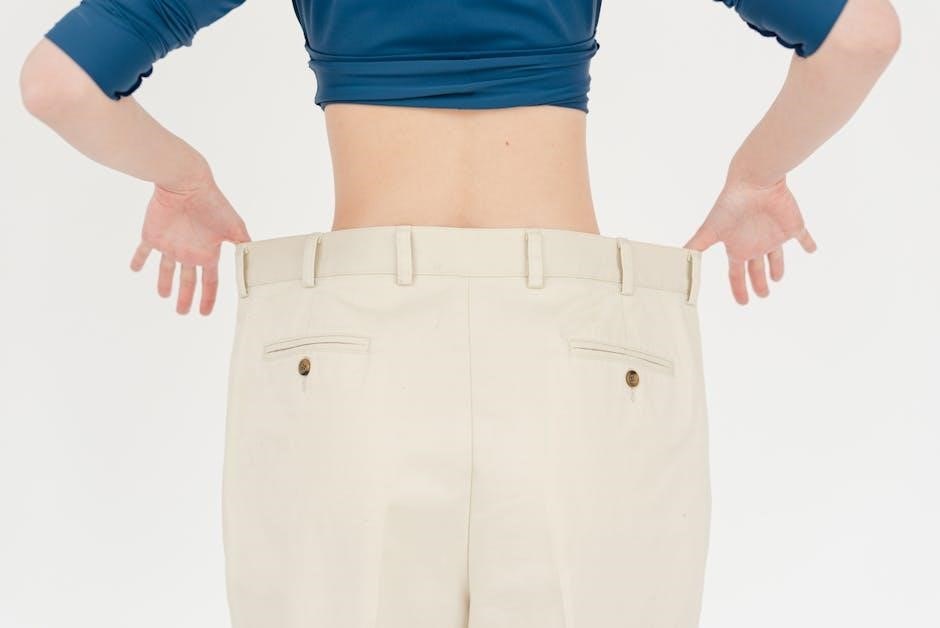
Belt Sizing Guide: A Comprehensive Overview (Updated 02/17/2026)
Navigating belt sizes requires understanding measurements, charts, and brand specifics like Gucci; accurate sizing ensures comfort and style for both men and women.
Belt sizing isn’t simply about your waist measurement; it’s a nuanced process involving understanding how belts are measured and fitted for optimal comfort and style. Traditionally, belt sizes are indicated in inches, but these numbers don’t directly correlate to your waist size. Instead, they typically represent the measurement from the buckle’s prong to the middle hole of the belt.
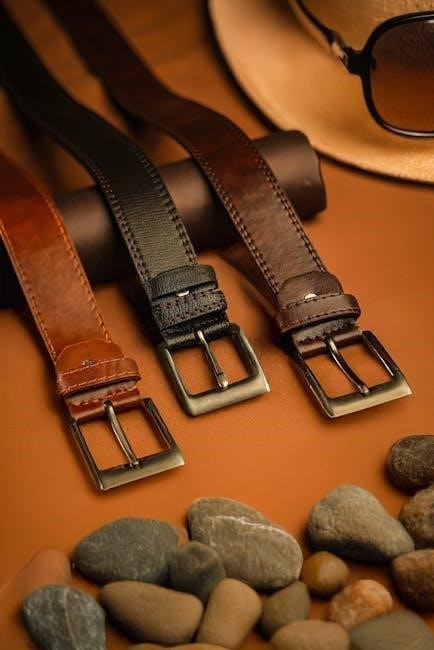
This system assumes a degree of adjustability, allowing for a comfortable fit even with slight fluctuations in waist size. However, variations exist between manufacturers, making a universal size chart unreliable. Factors like belt width and material can also influence the fit. Furthermore, understanding the difference between pant size and belt size is crucial – they are not interchangeable. A proper fit enhances both the appearance of your outfit and your overall comfort throughout the day.
Why Accurate Belt Sizing Matters
Choosing the correct belt size extends beyond mere aesthetics; it significantly impacts comfort, garment integrity, and overall presentation. A belt that’s too tight can cause discomfort, restrict movement, and even affect digestion. Conversely, a belt that’s too loose won’t provide adequate support, potentially leading to wardrobe malfunctions and a sloppy appearance.
Proper sizing ensures your pants sit correctly, maintaining their intended shape and preventing unsightly bunching or sagging. It also protects the belt itself, preventing unnecessary stress on the buckle and holes, extending its lifespan. Investing in a correctly sized belt demonstrates attention to detail and elevates your style. Ultimately, accurate belt sizing is a small detail that makes a substantial difference in both functionality and fashion.
Methods for Determining Your Belt Size
Accurately determining your belt size involves a couple of straightforward methods, ensuring a comfortable and secure fit. The most common approach is measuring your waist. Use a flexible measuring tape, positioning it snugly around your natural waistline – typically just above your hip bones. Ensure the tape is level and not too tight. Record this measurement in inches;
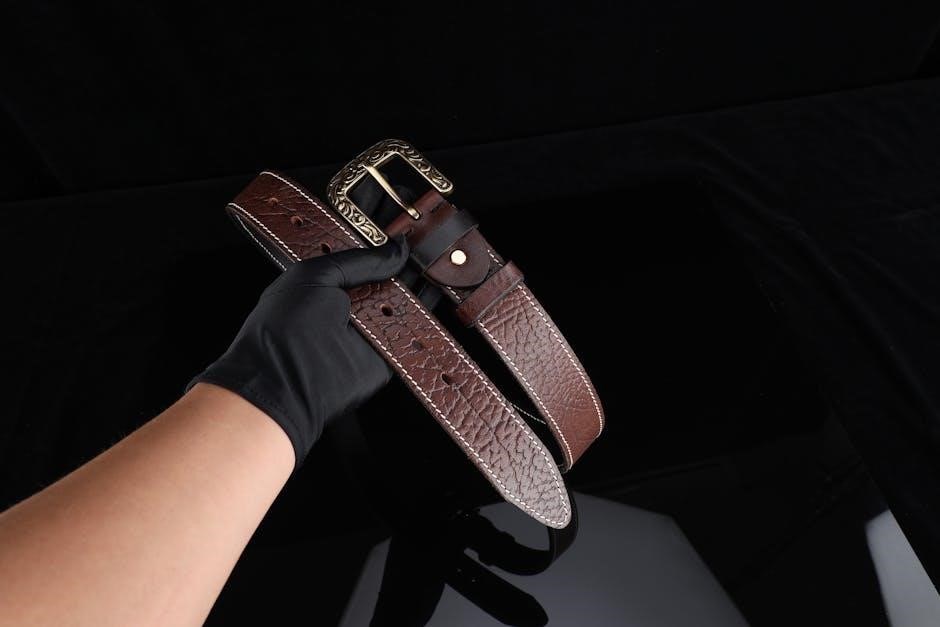
Alternatively, if you’re purchasing a belt to wear with pants, utilizing your inseam can be helpful. While less precise than a waist measurement, it provides a reasonable estimate. Remember that belt sizes often differ from waist sizes; consulting a size chart is crucial. Consider whether you prefer a snug or looser fit when interpreting your measurements.
Measuring Your Waist
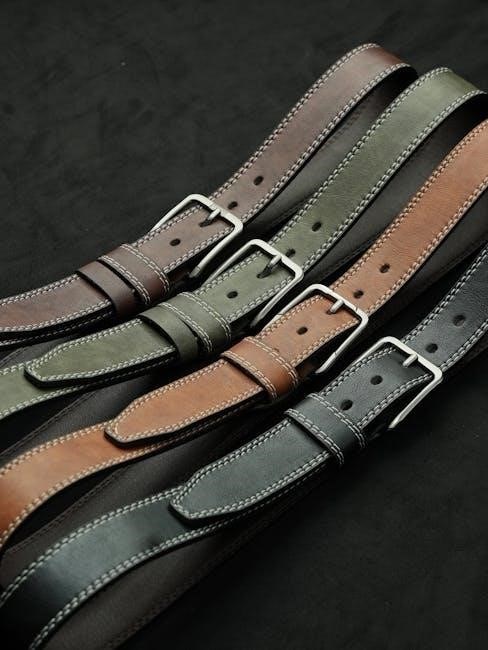
Precise waist measurement is fundamental to finding the correct belt size, guaranteeing both comfort and a flattering fit. Begin by standing naturally and relaxing your abdomen. Take a flexible measuring tape and position it around your natural waistline – this is generally located approximately one inch above your belly button, or where you naturally bend when standing.
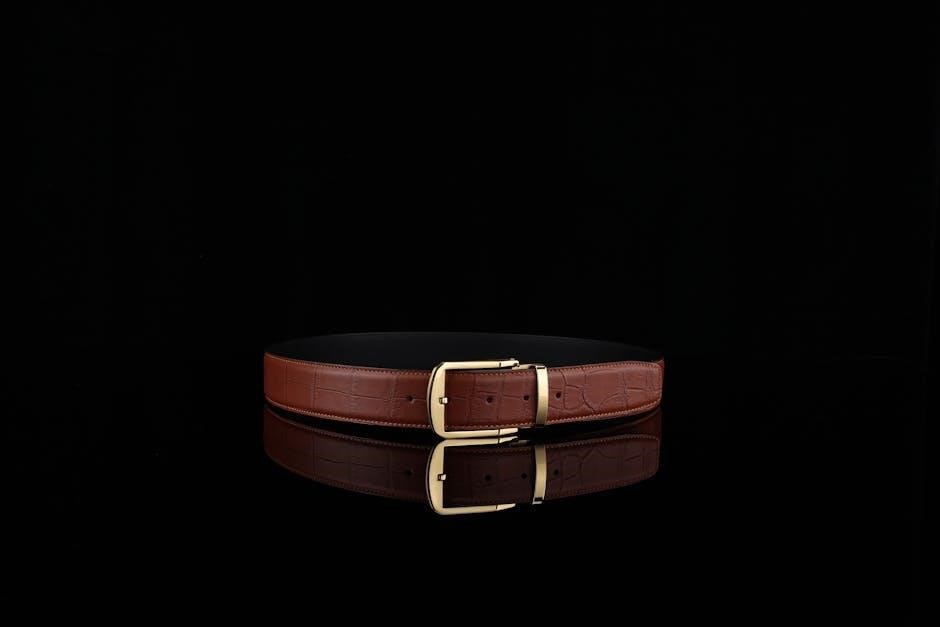
Ensure the tape measure is snug but not constricting; it should lie flat against your skin without compressing your waist. Maintain a level position all the way around your body. Record the measurement in inches. For the most accurate result, it’s best to have someone else take the measurement for you. Repeat the measurement a couple of times to confirm consistency.
Using Your Inseam (For Pants Belt Size)
While waist measurement is primary, your pants’ inseam can offer a secondary reference point, particularly when purchasing belts to complement specific trousers. This method is less direct than measuring your waist, but helpful if you’re unsure of your exact waist size or are buying a belt online without trying it on.
Measure your inseam by standing with your shoes on and measuring from the crotch of your pants down to the bottom hem. This measurement doesn’t directly translate to belt size, but it helps determine the overall fit of your pants. A well-fitting pair of pants will naturally sit at a consistent point on your waist, aiding in belt placement. Consider the rise of your pants – higher rises may require a slightly different belt size than lower rises.
Belt Size Charts: Men’s Belts
Understanding men’s belt sizing requires referencing standardized charts, as sizes often differ from pant waist measurements. Typically, a belt size is indicated in inches and corresponds to the measurement from the buckle’s prong to the middle hole of the belt. A common rule of thumb is to add 2-4 inches to your pant waist size to determine your belt size; however, this can vary.
Standard men’s belt sizes generally range from 30 inches to 44 inches, with half-inch increments available. Always consult the specific brand’s size chart, as Gucci, for example, may have unique sizing conventions. It’s crucial to prioritize a comfortable fit, allowing for some adjustment based on your build and preferred wearing style.
Standard Men’s Belt Sizes
Generally, standard men’s belt sizes begin at 30 inches and extend up to 44 inches, frequently offered in one-inch or half-inch increments. Common sizes include 32, 34, 36, 38, 40, 42, and 44 inches. These sizes represent the total length of the belt, from the buckle attachment point to the middle hole. It’s important to remember that these are nominal sizes and can vary slightly between manufacturers.
For instance, a man with a 34-inch waist typically requires a size 38 belt, accounting for the overlap needed for buckling. However, individual preferences and the belt’s style (e.g., casual versus dress) can influence the ideal size. Always check specific brand guidelines, like those from Gucci, for precise measurements.
Converting Waist Measurement to Belt Size (Men)
A simple rule of thumb for men is to add 4 to 6 inches to your actual waist measurement to determine your appropriate belt size. For example, if your waist measures 32 inches, a size 36 or 38 belt is generally recommended. This allowance accounts for the portion of the belt that needs to pass through the buckle and provide a comfortable fit.
However, this is a guideline, and individual preferences vary. Some men prefer a snugger fit, while others prefer more room. Consider the buckle style; larger buckles may require a slightly larger belt size. Always consult brand-specific size charts, such as Gucci’s, as their sizing may differ. Trying on belts is ideal, but if ordering online, err on the side of slightly larger.
Belt Size Charts: Women’s Belts
Women’s belt sizing often mirrors dress sizes, but relying solely on this can be inaccurate. A precise waist measurement remains the most reliable method. Standard women’s belt sizes typically range from 28 inches to 36 inches, though extended sizes are readily available. These sizes often correspond to US dress sizes 4 through 14, but variations exist.
It’s crucial to check specific brand charts, like Gucci’s, as their sizing conventions may differ. When converting from waist size, remember the 4-6 inch addition rule applicable to men also applies to women, providing necessary slack for buckle functionality. Consider the intended wear – belts worn lower on the hips may require a different size than those worn at the natural waist.
Standard Women’s Belt Sizes
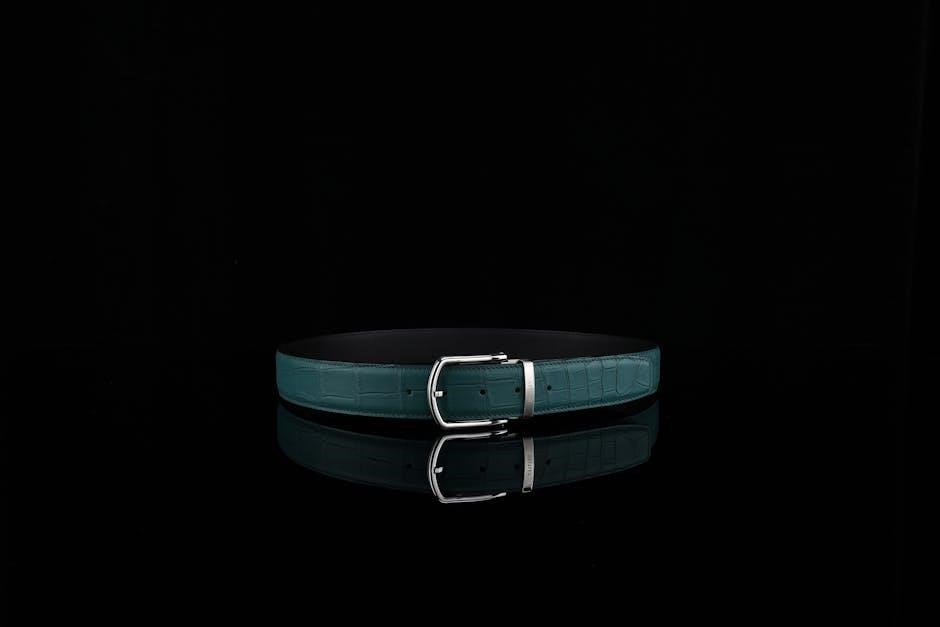
Generally, standard women’s belt sizes begin at 28 inches and extend up to 36 inches, catering to a broad range of waist measurements. However, this is a simplified overview; many retailers and brands offer extended sizes beyond 36 inches, reaching 40 inches or even larger to accommodate diverse body types.
These sizes frequently correlate with US dress sizes, approximately ranging from size 4 to size 14. It’s important to note that these correlations aren’t absolute, and individual fits can vary significantly based on brand and belt style. Always prioritize measuring your waist accurately for the best results. Brands like Gucci may have unique sizing standards, so consulting their specific chart is recommended.
Converting Waist Measurement to Belt Size (Women)
To determine your ideal belt size, add between 2 to 4 inches to your natural waist measurement. This allowance ensures a comfortable fit, preventing the belt from being too tight or restrictive. For example, if your waist measures 30 inches, a belt size of 32 to 34 inches is generally recommended.
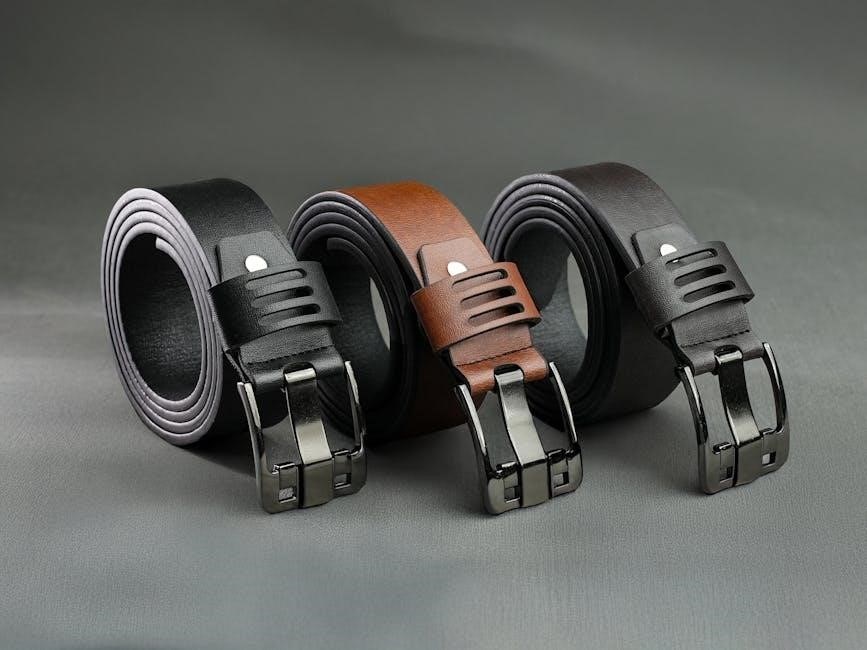
However, consider the belt’s intended wear – higher or lower on the waist. Lower-rise styles may require a slightly larger size. Brand variations also play a role; Gucci belts, for instance, might run smaller or larger than average. Always check the specific brand’s size chart. If you’re between sizes, it’s often best to size up for greater comfort and adjustability.
Belt Width Considerations
Belt width significantly impacts the overall aesthetic and functionality, harmonizing with your pant style. Wider belts, typically 1.5 inches or greater, pair well with jeans and casual trousers, creating a bolder statement. Conversely, slimmer belts, around 1 inch, are more suited for dress pants, skirts, and more refined outfits.
The rise of your pants also influences the ideal width. Higher-waisted styles often benefit from wider belts to maintain proportion, while lower-rise pants look best with narrower options. Consider the belt loops on your pants; the belt should comfortably fit without excessive slack or strain. Ultimately, choosing the right width enhances your silhouette and completes your look.
Choosing the Right Width for Your Pants
Selecting the appropriate belt width hinges on your pant’s style and formality. For classic dress pants and tailored trousers, a 1 to 1.25-inch belt offers a sophisticated, understated look. Wider belts, ranging from 1.5 to 2 inches, complement casual pants like jeans, chinos, and cargo pants, adding a touch of ruggedness.
Consider the belt loops; the belt should fill them adequately without significant overhang. A general rule is to match the belt width to the loop width. Avoid excessively wide belts with narrow loops, as it appears disproportionate. Fashion trends sometimes favor wider or narrower belts, but prioritize a balanced and harmonious appearance with your existing wardrobe.
International Belt Size Conversion

Understanding international belt size variations is crucial when purchasing from overseas retailers or traveling. US belt sizes typically correspond to waist measurements in inches, while European sizes utilize centimeters. A US size 32-inch belt generally equates to a European size 81-86 cm. UK belt sizes often differ slightly, with a US 32-inch belt potentially translating to a UK 34 or 36, depending on the brand’s specific sizing chart.
Always consult the retailer’s size chart, as conversions can vary. It’s prudent to measure your waist accurately and compare it to the provided chart rather than relying solely on assumed conversions. Discrepancies can occur, so verifying the size before purchase prevents returns and ensures a proper fit.
US to European Belt Size Conversion
Converting US belt sizes to European standards requires a basic understanding of the differing measurement systems. European belt sizes are generally expressed in centimeters, while US sizes are in inches. As a general guideline, subtract 2.54 cm from your US waist size in inches to get an approximate European size. For example, a US size 32-inch waist typically corresponds to an approximate European size 81 cm.
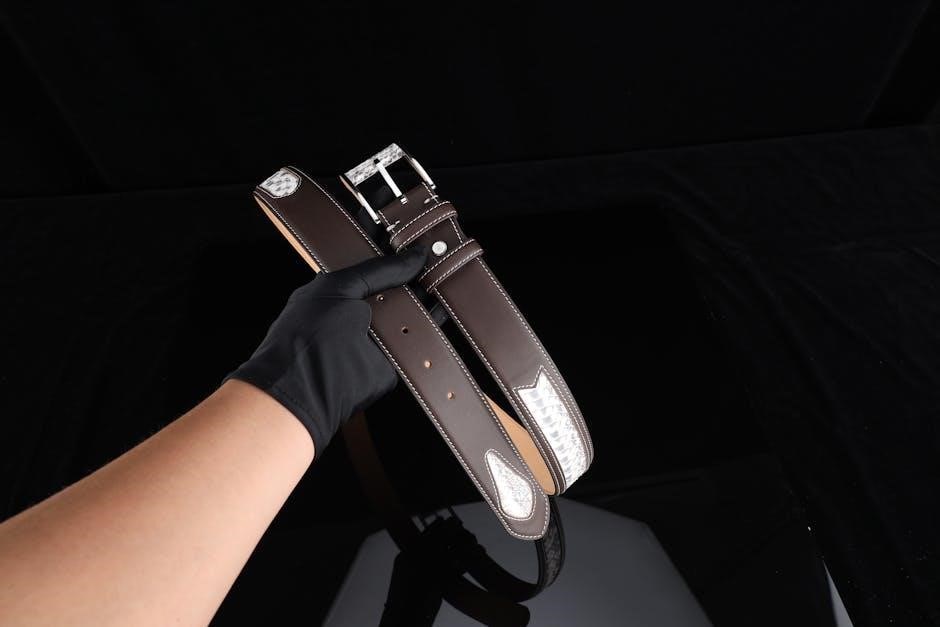
However, it’s vital to remember that these are approximations, and brand-specific variations exist. Always prioritize checking the specific brand’s size chart for the most accurate conversion. Some European brands may use slightly different sizing conventions, so direct conversion isn’t always reliable. Accurate measurement and chart verification are key.
US to UK Belt Size Conversion
Translating US belt sizes into UK equivalents demands attention to detail, as the systems aren’t directly proportional. UK belt sizes are often represented numerically, differing from the inch-based US system. A common conversion suggests adding 4 inches to your US belt size to find the approximate UK equivalent. For instance, a US size 32-inch belt generally equates to a UK size 36.
However, this is a generalization, and discrepancies can occur between brands. Always consult the specific retailer’s or manufacturer’s size guide for precise conversions. Some UK brands may utilize slightly altered sizing standards, making a direct mathematical conversion unreliable. Prioritizing brand-specific charts ensures a proper fit and avoids sizing errors.
Troubleshooting Common Belt Sizing Issues
Encountering fit problems with belts is common, often stemming from inaccurate measurements or fluctuating waistlines. If a belt feels too tight, it indicates the size is too small; conversely, looseness suggests a size that’s too large. Consider that waist size can vary throughout the day, influenced by factors like meals and activity levels.
For individuals with variable waist sizes, opting for a belt with adjustable features is crucial. Belts with multiple holes or stretchable materials offer greater flexibility. Regularly reassessing your waist measurement is also recommended, especially if experiencing weight fluctuations. Don’t hesitate to exchange or return a belt if it consistently feels uncomfortable or doesn’t fit properly.
Belt Feels Too Tight or Too Loose
A belt feeling too tight signifies it’s likely undersized for your current waist measurement. This discomfort restricts movement and can negatively impact posture. Conversely, a loose belt indicates oversizing, leading to slippage and a less polished appearance. It’s crucial to remember that belt sizes aren’t always directly proportional to clothing sizes.
If tightness persists, double-check your initial waist measurement and compare it to the belt’s size chart. For looseness, consider whether the belt has stretched over time, particularly with leather belts. Trying a smaller size or exploring belts with more adjustment holes can resolve these issues. Prioritize comfort and a secure fit for optimal wear.
Dealing with Variable Waist Sizes
Fluctuations in waist size are common due to factors like diet, exercise, or bloating. This presents a challenge when selecting a belt that consistently fits. A practical solution is opting for belts with numerous adjustment holes, providing greater flexibility. Alternatively, consider belts with a more adaptable design, such as those featuring a stretchable component or adjustable buckle systems.
For significant variations, owning multiple belts in slightly different sizes might be necessary. Regularly reassessing your waist measurement and adjusting your belt selection accordingly ensures a comfortable and secure fit; Prioritizing belts with a versatile design can mitigate the inconvenience of a changing waistline, offering both style and practicality.
Where to Find Belt Size Information for Specific Brands (e.g., Gucci)
Locating accurate sizing details often requires visiting the brand’s official website. For luxury brands like Gucci, their website provides dedicated belt size guides and charts, detailing conversions between waist measurements and belt sizes. These guides often include specific instructions for measuring and selecting the appropriate size for their particular styles.
Retailers carrying the brand may also offer sizing assistance, either online or in-store. Checking product descriptions on e-commerce platforms can reveal brand-specific sizing recommendations. Customer reviews can provide valuable insights into whether a particular style runs true to size. Always prioritize the brand’s official resources for the most reliable information.
Resources for Further Belt Sizing Assistance
Beyond brand websites, numerous online resources offer belt sizing guidance. Fashion blogs and style websites frequently publish comprehensive belt size guides, often including visual aids and detailed explanations. Online forums and communities dedicated to fashion can provide peer-to-peer advice and recommendations based on personal experiences.
Tailors and professional clothing fitters are excellent resources for personalized assistance. They can accurately measure your waist and recommend the appropriate belt size, considering your body type and pant style. YouTube tutorials demonstrate proper measuring techniques. Remember to cross-reference information from multiple sources to ensure accuracy and find the best fit for your needs.