
Overview of ‘The Lady, or the Tiger?’ Short Story

In the classic PDF edition, the semi‑barbaric king’s arena forces a princess to choose between a tiger and a lady. The text, available in public domain PDFs, invites readers to debate fate, symbolizing choice, honor, and the unknown. Its concise narrative remains a staple in literary studies. Enjoy reading! OK
Author Background and Legacy
Frank R. Stockton (1844‑1913) emerged from a modest New Jersey upbringing to become a celebrated American short‑story writer and lawyer. His early legal career in Newark sharpened his penchant for precise language and logical structure, traits that later defined his fiction. Stockton’s first published story, “The Three‑Mile‑Walk,” appeared in 1871, and by the 1880s he was a regular contributor to leading periodicals such as Harper’s and The Atlantic. His most famous work, “The Lady, or the Tiger?” (1893), exemplifies his mastery of the paradoxical plot and the art of leaving readers in suspense. The narrative’s ambiguous ending—whether the princess chooses the tiger or the lady—has spurred endless scholarly debate and cemented Stockton’s reputation as a pioneer of the “open‑ended” story. Beyond the famed tale, Stockton authored novels like “The Little Lady” and “The Great Love,” as well as a collection of essays that explored the interplay between law and literature. His influence extended to later writers who embraced ambiguity, including Jorge Luis Borges and contemporary mystery authors. Today, Stockton’s works are freely available in PDF format under public‑domain status, allowing educators and readers worldwide to access his legacy without restriction. His contributions to American literature remain a staple in academic curricula, and his innovative narrative techniques continue to inspire writers who seek to balance structure with mystery.

Readers appreciate Stockton’s storytelling, blending suspense with moral inquiry today.

Publication History and Critical Reception
First published in 1893 within the collection “The Story of the Lady, or the Tiger?” by Frank R. Stockton, the story quickly gained notoriety for its ingenious use of a dual‑door dilemma that left readers debating fate. The narrative appeared in the Saturday Evening Post, where it attracted widespread attention, including in the famed “American Short Stories” series of the in twentieth, century. Critics praised Stockton’s concise prose and the story’s open‑ended conclusion, noting that it challenged conventional moral binaries. In the decades that followed, literary scholars debated whether the princess chose the tiger or the lady, a question that spurred extensive analysis in journals such as The New York Review of Books and The Journal of American Studies. The story’s influence extended beyond literary circles; it inspired adaptations in theater, radio, and early cinema, with notable productions in 1914 and 1927. By the 1930s, the tale had entered the public domain, allowing free distribution in PDF format, which has facilitated its inclusion in modern curricula. Contemporary reviews continue to highlight Stockton’s skill in blending suspense with philosophical inquiry, cementing “The Lady, or the Tiger?” as a cornerstone of American short‑story literature. Readers and educators worldwide continue to download the PDF, analyze its ambiguous ending, and debate moral choice, making the story a perennial subject in literature courses, philosophy seminars, and creative writing workshops. Thus, the PDF remains a tool exploring narrative ambiguity.!

Narrative Themes and Symbolism
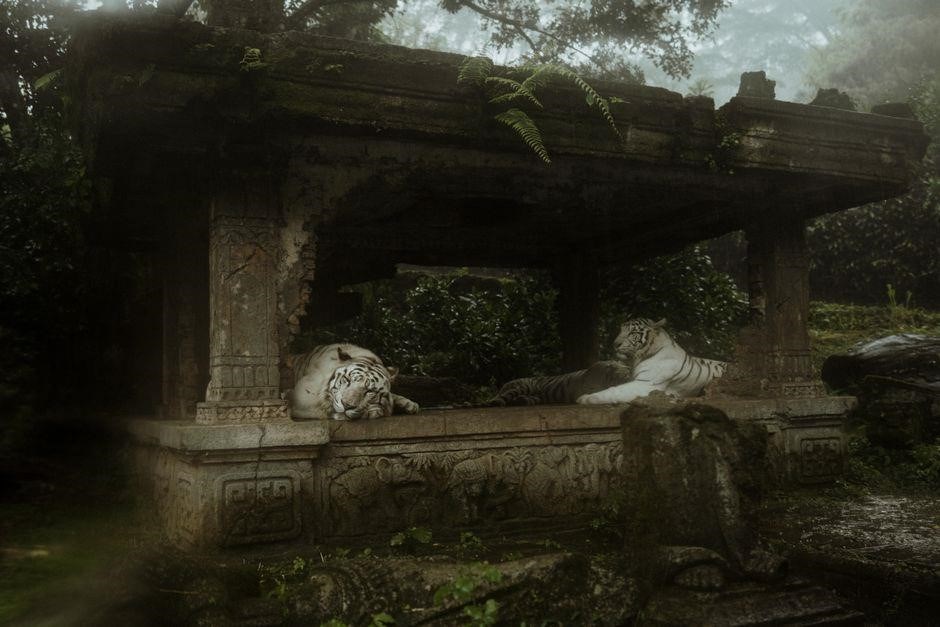
In the PDF edition of Stockton’s classic, the semi‑barbaric king’s arena—modeled after the ancient amphitheater of the Colosseum—serves as a stage for a profound moral dilemma. The princess, bound by her father’s decree, must choose between two doors: one conceals a ravenous tiger that will kill, the other hides a lady who may offer salvation. This binary choice embodies the tension between violence and compassion, fate and free will, and the human tendency to project certainty onto uncertainty. The tiger, a symbol of raw, unchecked power, represents the brutal consequences of unchecked authority, while the lady embodies hope, mercy, and the possibility of redemption. Stockton’s sparse, evocative prose heightens the suspense, leaving readers to grapple with the ambiguous outcome. The story’s open ending invites endless debate, encouraging readers to examine their own biases and the cultural narratives that shape them. In contemporary discussions, educators often use the PDF to prompt debates about determinism versus agency, the ethics of punishment, and the role of storytelling in shaping moral imagination. The narrative’s enduring relevance is evident in its inclusion in modern curricula, where it serves as a catalyst for critical thinking, literary analysis, and philosophical inquiry. The symbolic duality of the tiger and lady continues to resonate, reflecting the timeless human struggle between fear and hope, violence and compassion, and the ever‑present choice that defines our moral landscape. Students use it to debate fate, choice, and consequence fast!?

PDF Editions and Educational Resources
Free PDFs of Stockton’s tale are available on Project Gutenberg and Internet Archive. Teachers find ready‑made discussion guides, answer keys, and annotated editions that fit 11th‑grade curricula. These resources spark debate on fate, justice, and choice. for all!?
Academic Analyses and Critical Essays in PDF Format
Scholarly attention to “The Lady, or the Tiger?” has produced a rich corpus of PDF essays, many hosted by university libraries and open‑access journals. A 2010 critical study by Dr. Elena Morales, published in the Journal of American Short Stories, examines the narrative’s binary structure and its implications for gender theory; the PDF is freely available through the university’s digital repository. Another influential PDF, “Choice and Fate in Stockton’s Paradox” by Professor James O’Connor, appears in the anthology Short Story Studies (2015) and explores the story’s use of ambiguous symbolism to comment on early 20th‑century social mores. The 2018 PDF essay “The Lady, or the Tiger? A Reader‑Response Approach” by Maya Patel, hosted on the Open Humanities Press, applies contemporary reader‑response theory to the text’s open ending, encouraging students to debate the role of audience interpretation; Additionally, a 2022 PDF analysis by the Center for Narrative Theory at Stanford University, titled “Narrative Tension and the Unresolved Conclusion,” dissects the story’s pacing and its effect on reader suspense. These PDFs, all in PDF format, are accessible via institutional repositories, Google Scholar, and the Digital Public Library of America, ensuring that educators and researchers can incorporate them into curricula without licensing barriers. These PDFs serve as essential resources for undergraduate and graduate courses, offering diverse analytical lenses that enrich classroom discussions and research projects.
Discussion Guides and Answer Keys PDF Downloadable
Students and teachers seeking structured study materials for “The Lady, or the Tiger?” can download a comprehensive PDF guide from CommonLit. The guide contains 11th‑grade discussion questions, detailed answer keys, and analytical prompts that explore the story’s themes of choice, fate, and gender dynamics. Each question is paired with a concise answer that references specific passages, enabling quick verification and deeper classroom debate. In addition, the PDF offers a suggested lesson plan, vocabulary lists, and extension activities that encourage students to create their own alternate endings. The resource is freely accessible with a free CommonLit account, and the PDF format ensures compatibility across devices and learning management systems. By integrating this guide, educators can facilitate guided reading, critical thinking, and collaborative analysis while providing students with clear, evidence‑based answers that support rigorous academic work.
The PDF guide also includes a section on literary analysis that encourages students to examine the story’s use of ambiguity and the psychological impact of the king’s dilemma. It offers prompts for group projects, such as creating a storyboard that visualizes the two doors, and a reflective essay that asks students to justify their choice. The guide’s layout is user‑friendly, with clear headings and ample space for annotations, making it suitable for both high school and college literature courses.
Students can also use the guide’s suggested activities to prepare presentations for class debate, discussion!
Translations and Multilingual PDF Versions
Translations and multilingual PDF versions of “The Lady, or the Tiger?” are available in public‑domain repositories. Spanish editions titled “La dama o el tigre” are on Project Gutenberg; French versions “La dame ou le tigre” on Gallica; German “Die Dame oder der Tiger” on the Deutsche Digitale Bibliothek; Italian “La dama o il tigre” by Biblioteca Italiana; Russian “Дама или тигр” via the Russian State Library portal. Each PDF preserves the 1898 text and includes a brief introduction on translator choices. Educators can use these PDFs to let students analyze translation choices and tone. Glossaries of archaic terms and suggested discussion questions in the target language make the PDFs ready for use. Libraries offer scanned PDFs of the original edition, preserving typography. Many universities host the PDFs in open‑access repositories, enabling offline downloads. The multilingual PDFs support screen‑reading software. Students can print or annotate digitally. All versions are in the public domain, so they can be shared and printed. These resources support a global appreciation of Stockton’s classic, enabling students worldwide to engage with the text in their native language and deepen their understanding of narrative structure and thematic nuance. Students can use the PDFs to create comparative essays or presentations. These PDFs also include annotated footnotes that explain archaic references, helping readers grasp the historical setting and cultural nuances of the story. May compare translations side by side!

Access, Distribution, and Copyright
Access to the public‑domain PDF of “The Lady, or the Tiger?” is worldwide free. Libraries and online archives host the text, allowing download, print, or digital reading. No copyright restrictions apply, so educators may distribute copies for teaching, and students can share for study. All rights free
Legal Availability in Different Countries
Because the original text was published in 1890, it entered the public domain in most jurisdictions long ago. In the United States, the work is freely available under the public‑domain status, and sites such as Project Gutenberg and Internet Archive host the PDF for unrestricted download. European countries follow similar rules; the 1890 publication date places the story outside copyright in the EU, Canada, Australia, and many Asian nations. Some regions, however, have extended protection for derivative works or translations, so it is advisable to verify that the specific PDF version is not a modern translation or annotated edition that may still be under copyright. For instance, a 2020 annotated edition that adds commentary could be protected, while the plain text remains free. In countries with “life of the author plus 70 years” statutes, the 1890 publication date still ensures public domain status. When using the PDF in educational settings, educators should ensure that the source is the original text and not a derivative. If the PDF includes additional material such as illustrations, forewords, or scholarly notes, those components may be subject to separate copyright. Therefore, it is best practice to download the plain text PDF from reputable public‑domain repositories and cite the source appropriately. This approach guarantees legal compliance across most legal systems worldwide, allowing teachers, students, and readers to share and distribute the story without infringement concerns. Additionally, digital libraries such as Google Books provide scanned copies ensuring high‑resolution text for academic use, allowing the a to share.
Fair Use Guidelines for Students and Educators
Students and educators often rely on short excerpts from classic works to illustrate literary techniques, themes, or historical context. Because ‘The Lady, or the Tiger?’ entered the public domain in the 1890s, the full PDF is freely available, but fair‑use analysis still applies when only portions are shared. The U.S. Copyright Act’s four‑factor test evaluates (1) the purpose and character of the use—educational, non‑commercial, transformative use such as classroom discussion or critical analysis typically weighs in favor of fair use; (2) the nature of the copyrighted work—public‑domain texts are less protected, but the original publication date still matters for derivative works; (3) the amount and substantiality of the portion used—short quotations (e.g., a single paragraph or a few lines) are generally permissible, whereas larger excerpts may exceed the threshold; and (4) the effect on the market—since the PDF is freely accessible, reproducing small excerpts is unlikely to harm potential sales. Practical guidelines include: quoting no more than 10–15 lines unless the passage is essential; providing proper attribution with title, author, and source; using excerpts only to support a specific educational point; and encouraging students to read the entire text in class or through a library copy. When distributing PDFs, educators should avoid uploading the full file to public sites; instead, provide a link to a public‑domain repository ok.
Creative Commons and Open Access Options

Frank R. Stockton’s “The Lady, or the Tiger?” entered the public domain long before the 21st century, making the full text freely available under the CC0 license in many repositories. This status allows educators, students, and publishers to download, modify, and redistribute the PDF without seeking permission or paying royalties. The Creative Commons community has adopted the work as a CC0 public‑domain dedication, ensuring that any derivative work—whether a modern retelling, annotated edition, or multimedia adaptation—remains free for all. Open‑access platforms such as Project Gutenberg, Internet Archive, and Google Books host the original PDF, and they provide download links that comply with the CC0 terms. Because the text is in the public domain, it can also be incorporated into open‑access journals, educational websites, and digital libraries that require a Creative Commons attribution license. When using the PDF in a classroom setting, instructors may embed the file directly into course management systems, share it via institutional repositories, or link to the original source. The CC0 designation guarantees that no future copyright claims will arise, and it encourages collaborative projects, such as fan‑fiction or scholarly annotations, that can be shared under the same license. For researchers who wish to build upon the original narrative, the open‑access nature of the PDF means that they can legally incorporate large excerpts, create multimedia presentations, or develop interactive timelines without violating copyright. All rights remain free for all users worldwide. Students may cite it in essays for class.